

Vertical Router: The Expert in Exquisite Wood Shaping
- phoenixmachine
- May 21, 2026
- 6:54 am
- No Comments
In the fields of solid wood furniture manufacturing, wooden craft creation, and custom home decoration, vertical routers are indispensable professional equipment when precision processing of wood, such as irregular cutting, grooving, and curved surface carving, is required. Their core capabilities—vertical structure + high-precision milling—make them ideal for these applications. They overcome the shortcomings of traditional milling tools, such as insufficient flexibility and limited precision in complex shaping. Through the combination of a high-speed rotating cutter and a stable worktable, they can create a rich variety of textures and shapes on the wood surface, giving products a unique artistic feel and functionality. They are a core tool in the modern wood processing industry that balances precision and creativity.
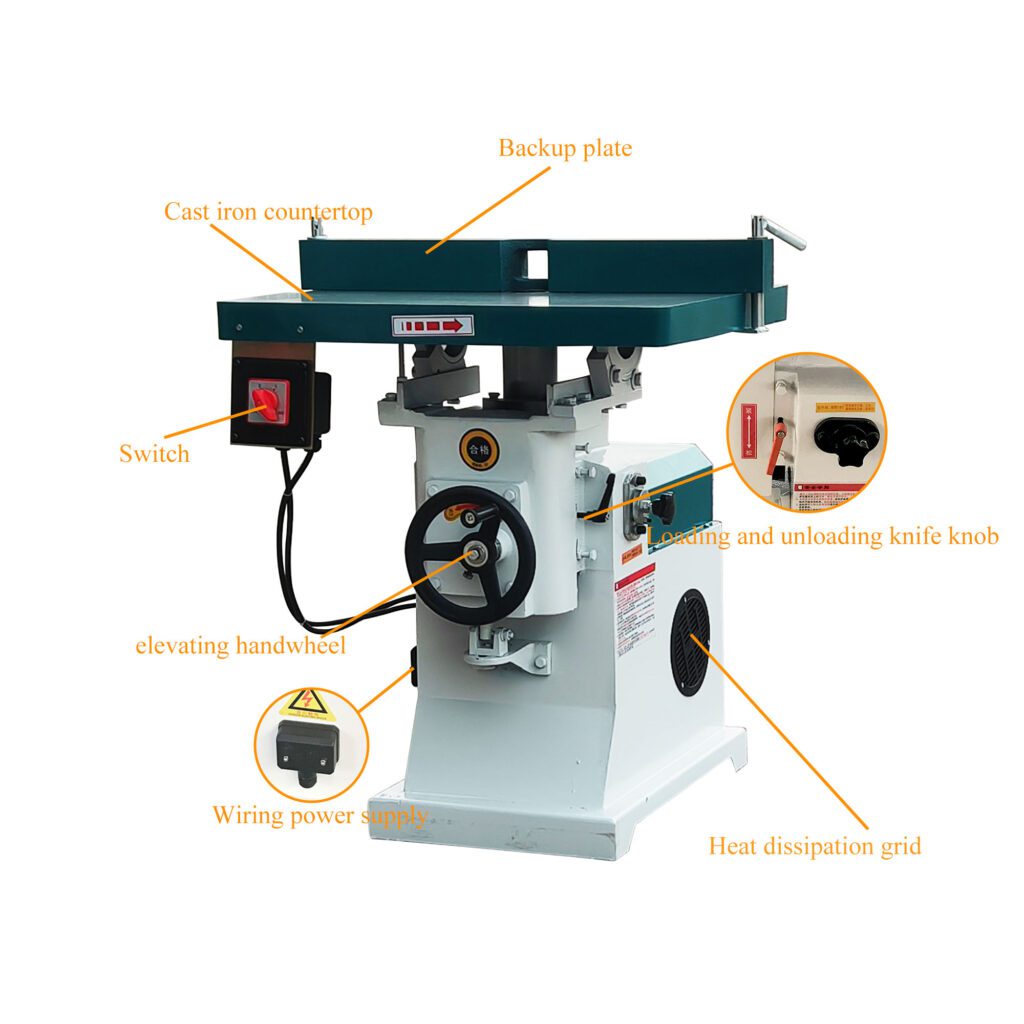
In terms of performance advantages, the core highlights of the vertical router lie in its “diversity of shapes,” “high processing precision,” and “high ease of operation.” In terms of design versatility, by changing different specifications and types of milling cutters and coordinating with multi-angle adjustments to the worktable, various complex shapes can be achieved, such as milling curved edges, processing diamond-shaped grooves, and simple relief carving in wood. For example, in the processing of solid wood wardrobe doors, it can mill smooth curved lines and carve simple floral patterns, making the doors less monotonous. Regarding processing precision, the combination of a high-precision spindle and a stable worktable ensures that the processing dimensional error is ≤0.03mm and the surface roughness can reach below Ra1.6, meeting the stringent requirements of high-end furniture for detail precision. In terms of ease of operation, the vertical structure design allows operators to directly observe the processing process and easily make real-time adjustments. Some semi-automatic models are equipped with manual feed rails; operators only need to push the workpiece along the rails to complete the milling. Even beginners can operate independently after simple training, and the processing efficiency is 8-12 times that of manual carving, making it suitable for small to medium batch personalized production.
In terms of applicable scenarios, vertical milling machines cover the needs for “irregular and fine processing of various types of wood.” In the solid wood furniture manufacturing industry, vertical routing machines can be used for shaping curved surfaces of table and chair legs, processing irregularly shaped edges of cabinet doors, and milling grooves for drawer handles, adding exquisite details to furniture. In wooden handicrafts, they can create irregular outlines for wooden ornaments, carve patterns on bracelets, and create complex lines for decorative picture frames, helping handicrafts achieve diversified designs. In the field of customized home decoration, they are suitable for processing embossed patterns on wall panels, milling irregularly shaped lines for ceiling decorations, and cutting shapes for background walls, enhancing the artistic atmosphere of home spaces. Furthermore, in musical instrument manufacturing (such as groove processing for guitar necks) and wooden mold production (such as cavity milling for simple stamping dies), vertical routing machines also play an important role, achieving high-precision functional processing.
As the wood processing industry’s demand for personalization and refinement increases, vertical routing machines are also continuously upgraded and optimized. This characteristic of “flexible processing + intelligent upgrading” allows vertical routing machines to maintain competitiveness in the field of irregular wood processing, providing strong support for promoting the transformation of the wood processing industry from “standardization” to “personalization + high precision.”
