

In the woodworking industry, whether splicing solid wood furniture, veneer panels, or securing mortise and tenon joints, the quality of the bonding between wood pieces directly impacts the strength and lifespan of the finished product. Designed specifically for woodworking, woodworking glue applicators can evenly apply specialized woodworking glue (such as white glue, hot melt glue, and plywood glue) to the wood surface or joints, tailored to the wood’s grain and density. This effectively eliminates the problems of uneven glue application, uneven penetration, and glue waste often associated with manual gluing. Providing stable and efficient glue application support for various woodworking gluing processes, they are a key piece of equipment for woodworking workshops and furniture factories to achieve standardized production.

In terms of structural design, woodworking glue applicators are designed to adapt to wood characteristics, offering targeted improvements based on general-purpose glue applicators. Core components include a wood-specific feed mechanism, a woodworking glue supply system, a customized glue applicator, and a control system tailored to woodworking processes. The feeding mechanism uses non-slip rubber conveyor rollers with a surface texture that enhances friction with the wood, preventing conveying deviations due to smooth wood grain or uneven density. The roller spacing can be flexibly adjusted according to the thickness of the wood (usually 3-100mm, covering thin boards, thick boards, and square materials). The glue supply system is equipped with a high-torque delivery pump and anti-clogging pipeline to ensure smooth glue delivery, considering the high viscosity of woodworking glue (such as plywood glue). The glue storage tank also has a heating and insulation function (some models) to prevent the glue from solidifying in low temperatures. The glue application device is a “key customization point” of the woodworking glue application machine. Common types include roller coating, scraper coating, and tooth comb type. The roller coating method mostly uses a rubber roller with fine grain, which can form a uniform glue film on the wood surface while preventing excessive glue from penetrating into the wood texture; the scraper coating method is equipped with a metal scraper with an adjustable angle, which is suitable for applying a thick glue layer on the joint surface of wood (such as plywood and tenon) to ensure bonding strength; the tooth comb method uses a toothed glue comb to form strip-shaped glue marks on the wood surface, which not only saves glue but also enhances the air permeability when splicing wood and avoids the formation of bubbles inside the glue layer; the control system simplifies the operation interface and presets common woodworking modes such as “board veneer”, “solid wood plywood”, and “mortise and tenon bonding”. The operator only needs to select the corresponding mode, and the equipment will automatically match the glue coating thickness (usually adjustable from 0.05-1mm) and feeding speed (1-15 meters/minute), reducing the difficulty of operation. The system’s workflow closely aligns with woodworking scenarios. For example, for gluing common solid wood panels, the operator first selects “Solid Wood Paneling” mode in the control system based on the wood material (e.g., pine, oak) and the type of glue used. The operator then adjusts the glue roller pressure and feed speed. The wood to be joined is neatly arranged at the feed inlet. After starting the machine, the feed mechanism slowly moves the wood into the gluing area. The glue supply system delivers the glue to a tooth-comb-type gluing device, which creates even stripes of glue on the joint surface. The glued wood is discharged from the discharge port and directly enters the subsequent panel pressing process, eliminating the need for additional waiting and significantly shortening the processing cycle. For veneer gluing, the machine automatically switches to roller application mode, using a fine-grained glue roller to apply a thin, even film of glue to the substrate surface, ensuring bubble- and wrinkle-free veneer application.
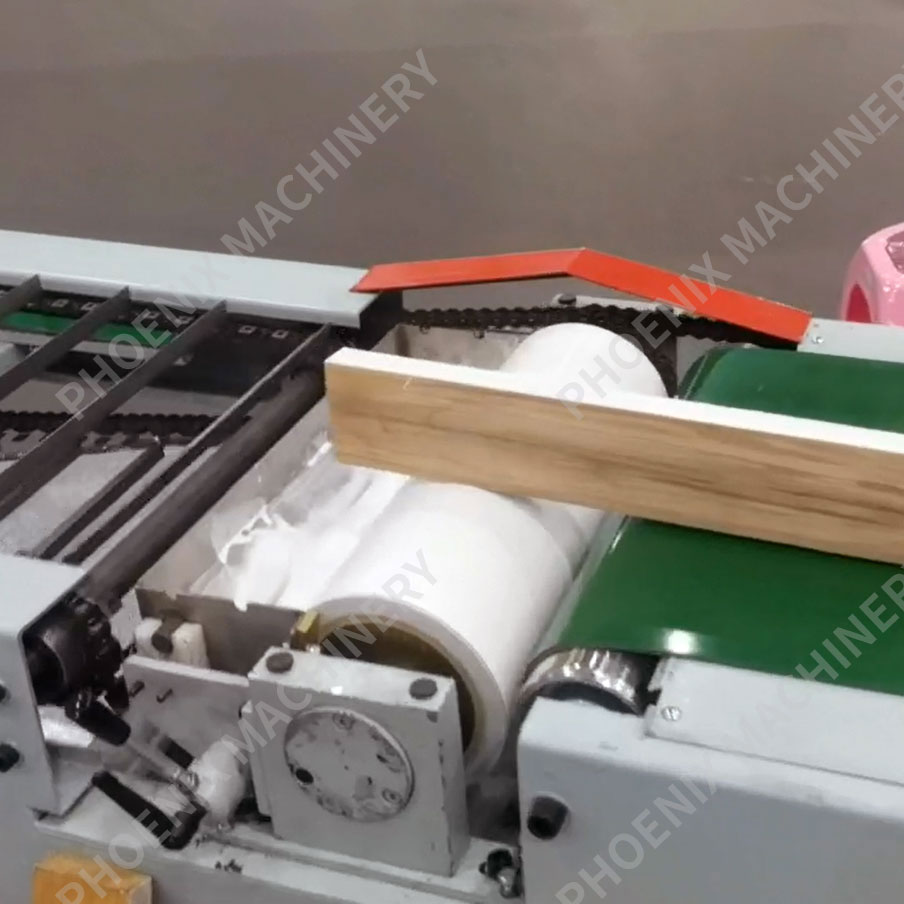
Compared to general-purpose gluing machines and manual gluing, woodworking gluing machines offer highly targeted advantages. First, it adapts to the characteristics of the wood, addressing gluing challenges caused by variations in wood grain and density, avoiding glue waste and poor bonding. It is particularly suitable for a variety of woodworking substrates, including solid wood, MDF, and particleboard. Second, it adapts to woodworking processes, with specialized gluing methods designed for different woodworking processes, such as plywood, veneer, and mortise and tenon joints, to meet diverse bonding needs. For example, the tooth-comb gluing method is specifically designed for plywood, enhancing joint security. Third, the gluing precision is controllable, with the glue layer thickness tolerance within ±0.03mm, ensuring consistent gluing quality across the entire batch and avoiding quality variations caused by uneven manual gluing. Fourth, it protects the wood’s appearance. The optimized gluing device reduces glue penetration into the wood’s surface grain, preventing color variations caused by glue contamination and ensuring the aesthetics of the finished product.
Today, woodworking gluing machines have become essential equipment for solid wood furniture factories, custom woodworking workshops, and wood flooring manufacturers. In solid wood furniture production, these machines are used to apply glue to tabletops and wardrobe side panels, ensuring that large areas of solid wood are securely joined and crack-free. In panel processing, they provide uniform glue application for veneer or PVC film on density boards and particle boards, enhancing the decorative effect of the panels. In mortise and tenon joint processing, they apply glue to the tenons of table and chair legs and cabinet frames, enhancing the bonding stability of traditional mortise and tenon joints. In wooden door production, they apply glue to the joints between the core panel and the frame, ensuring that the doors retain their deformation over time. As consumers demand higher quality in solid wood furniture, woodworking glue machines, with their precise and efficient glue application capabilities, have become a key factor in ensuring the quality of woodworking products and improving production efficiency.
