

In wood processing, furniture manufacturing, and panel production, when fine sanding of workpiece surfaces is required while ensuring stable workpiece fixation and a clean processing environment, the vacuum adsorption sander has become a core piece of equipment in the industry due to its triple advantages of “vacuum fixation + high-efficiency sanding + real-time dust removal.” It solves the pain points of traditional sanders, which rely on clamps for fixation, easily damaging workpieces and causing sanding dust to scatter and pollute the environment. It can firmly fix workpieces of different materials and shapes through vacuum adsorption force, achieving a smooth and flat surface in conjunction with a precision sanding mechanism, while simultaneously removing sanding dust in real time. It is a powerful surface treatment tool that balances processing precision, operational efficiency, and environmental friendliness.
From a structural design perspective, the core of the vacuum adsorption sander lies in the coordinated operation of the “vacuum adsorption system” and the “precision sanding unit.” The main body of the equipment consists of a vacuum adsorption platform, a sanding mechanism, a dust removal device, and a control system. The vacuum adsorption platform adopts a honeycomb or porous structure and is internally connected to a high-performance vacuum pump. When activated, it creates a uniform negative pressure on the platform surface. The adsorption force can be flexibly adjusted according to the weight of the workpiece, effectively securing thin sheets and irregularly shaped workpieces while preventing deformation due to excessive adsorption force. The sanding mechanism carries multiple layers of sanding belts or sandpaper. The grit of the sanding belt can be changed according to sanding needs, and the distance between the sanding roller and the adsorption platform is precisely adjusted via a digital control system, with a minimum abrasion amount of 0.02 mm, ensuring uniform sanding of the workpiece surface. The dust removal device is linked to the adsorption system, directly sucking the dust generated during sanding into the dust collection box through pipes. The dust removal efficiency is up to 98%, effectively reducing the impact of dust on equipment precision and operator health. The control system is equipped with a touch screen, allowing preset parameters such as adsorption force, sanding speed, and sanding belt tension, making operation convenient and intuitive.
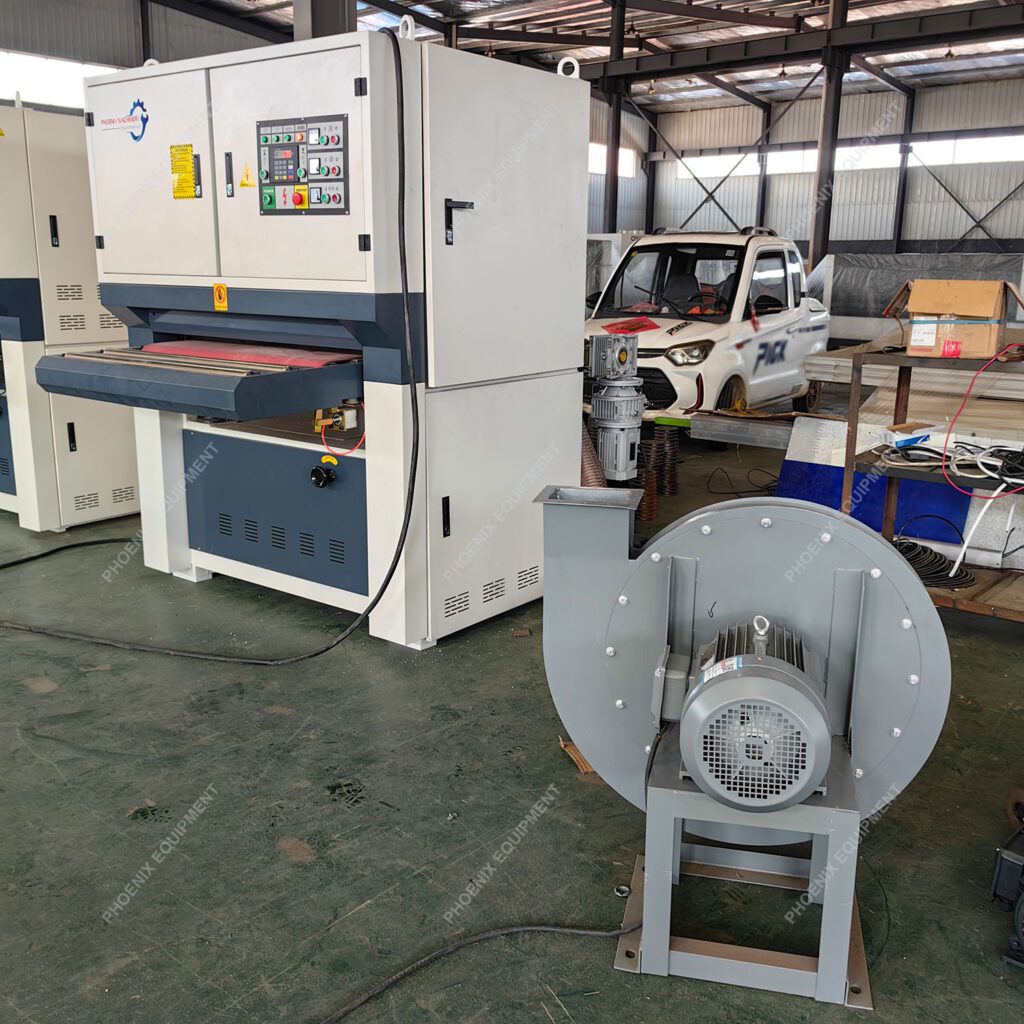
In terms of applicable scenarios, the vacuum adsorption sander covers the needs of “surface sanding of workpieces of various materials and shapes.” In the furniture manufacturing industry, vacuum adsorption sanders can be used for fine sanding of wardrobe doors, desk tops, and cabinet side panels, removing burrs and knife marks from the surface of the boards, laying a smooth foundation for subsequent painting and veneer processes. In the board production field, they can be used for batch sanding of both sides of plywood, MDF, and particleboard, improving the surface smoothness and meeting the different roughness requirements of various customers. In the processing of irregularly shaped workpieces, for curved furniture armrests, arc-shaped decorative parts, etc., customized adsorption molds can be used to achieve precise fixation and sanding, ensuring uniform sanding of irregularly shaped surfaces. In the metal processing field, they can also be used for light sanding of aluminum alloy sheets and stainless steel panels, removing the surface oxide layer and improving the texture of the metal surface.
With the continuous upgrading of processing needs, vacuum adsorption sanders are also constantly innovating and optimizing. This characteristic of “stable adsorption + intelligent upgrading” allows vacuum adsorption sanders to maintain their competitiveness in the field of surface treatment equipment, becoming an important force in promoting the improvement of product surface quality in various industries.
