

In furniture manufacturing, decoration, and handicraft processing, contour corner trimming machines are indispensable professional equipment when precise shaping of workpiece corners is required. Their core capabilities of “molding and precise trimming” make them invaluable. They overcome the shortcomings of traditional corner trimming tools, such as inability to accurately match complex corner shapes and low processing efficiency. Based on the contour of a pre-set mold, they can automatically trim the corners of workpieces made of materials such as wood, plastic, and aluminum alloy, creating rounded, right-angled, arc-shaped, or irregularly shaped corners. This provides crucial support for improving the product’s appearance and safety, making them a powerful tool for corner processing that balances styling diversity and processing precision.

From a structural design perspective, the core of the contour corner trimming machine lies in the coordinated operation of the “contour mold system” and the “precision trimming mechanism.” The main body of the equipment consists of a mold fixing device, a workpiece positioning platform, a high-speed dressing component, and an automatic feed system. The mold fixing device uses an adjustable clamp to securely hold different shaped molds (such as arc molds, right-angle molds, and irregular molds). The relative position of the mold and the dressing component can be precisely calibrated using a scale, ensuring that the dressing trajectory is completely consistent with the mold contour. The workpiece positioning platform has anti-slip pads and adjustable baffles on its surface, allowing for quick positioning according to the workpiece size and preventing workpiece displacement during processing. The high-speed dressing component is equipped with ultra-fine carbide tools with a tool speed of 8000-15000 rpm. Combined with a finely adjustable tool depth control knob, it can accurately remove excess material from edges and corners, with a minimum dressing allowance controllable to within 0.03 mm. The automatic feed system is driven by a variable frequency motor and can adjust the feed speed according to the workpiece material hardness (such as solid wood, acrylic, and aluminum alloy), ensuring a smooth and continuous dressing process and avoiding problems such as chipping and burrs.
In terms of performance advantages, the core highlights of the contour trimming machine lie in its “precise and uniform shaping” and “high-efficiency batch processing.” Regarding precision, its contouring system, relying on the standardized contours of the mold, ensures that the corner shape error of the same batch of workpieces does not exceed 0.05 mm, solving the pain point of “variable shapes for each piece” during manual corner trimming—for example, when processing the rounded corners of furniture cabinet doors, the curvature and size of all cabinet door corners are completely consistent, improving the overall aesthetics of the product. In terms of efficiency, the combination of automatic feeding and high-speed trimming allows the machine to process 150-300 small workpieces per hour, which is 5-8 times more efficient than manual corner trimming, significantly shortening the batch production cycle.
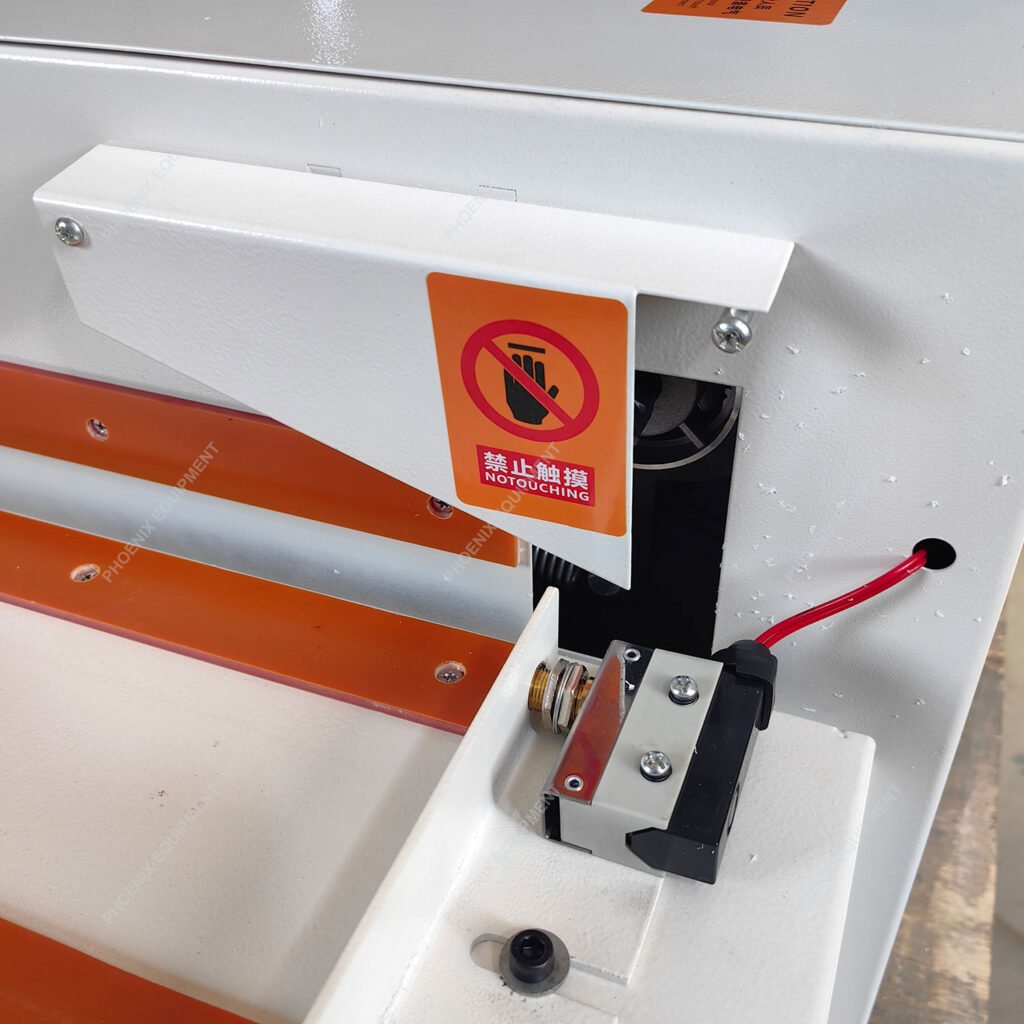
In terms of applicable scenarios, the contour trimming machine covers the needs of “corner trimming of multiple materials and shapes.” In the furniture manufacturing industry, it can be used for rounding corners on wardrobe doors, chamfering edges on dining tables, and processing irregularly shaped corners on drawer panels, eliminating sharp edges and improving safety and visual appeal. In the decoration and renovation sector, it can trim the joints of wooden baseboards and ceiling decorative lines, ensuring a seamless fit and enhancing the overall harmony of the decor. In the crafts and daily necessities industry, it can process rounded corners on wooden bracelets, scratch-resistant chamfers on plastic storage boxes, and delicate irregularly shaped edges on aluminum alloy ornaments, giving products unique design highlights.
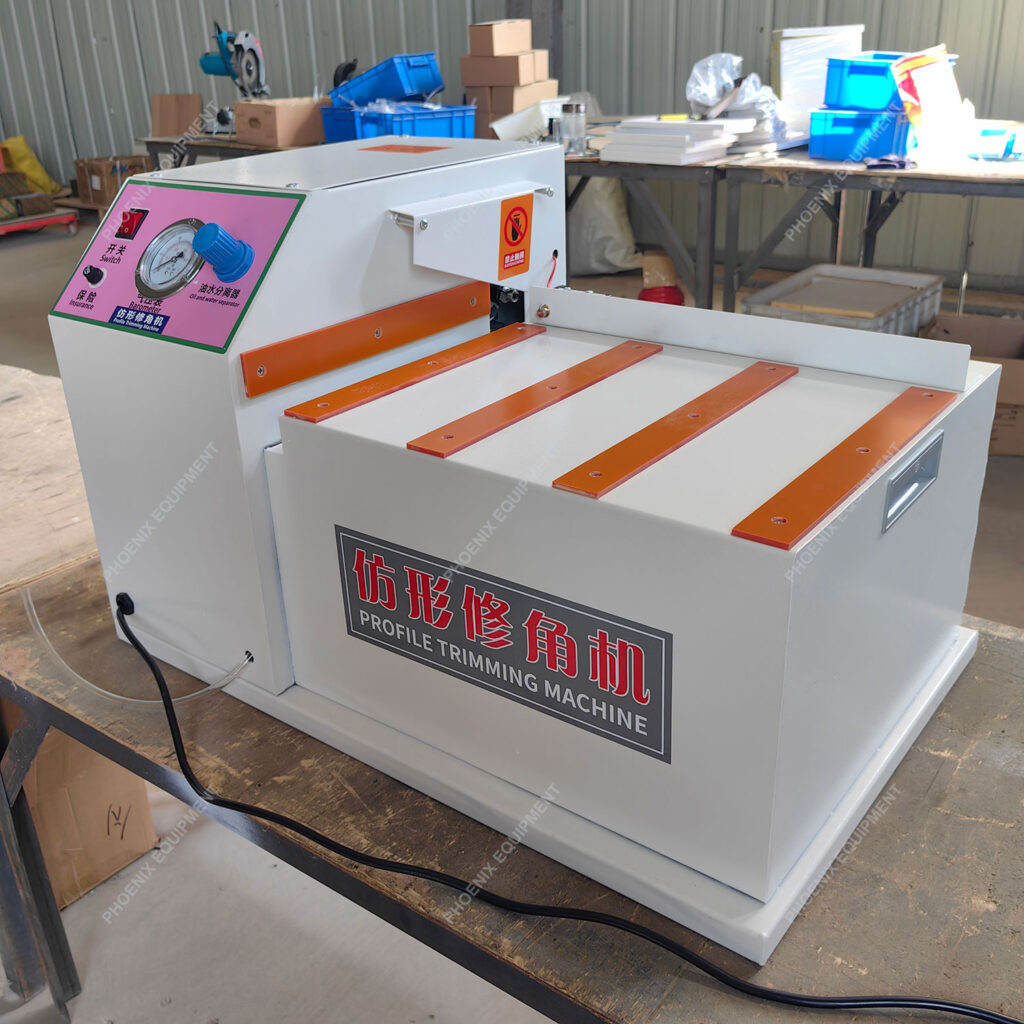
This characteristic of “precise contouring + flexible upgrades” allows contouring corner trimming machines to maintain a leading position in the field of corner processing equipment, becoming a vital force in driving the dual improvement of product aesthetics and quality across various industries.
