

In furniture manufacturing, interior decoration, and wood carving, exquisitely shaped wood mouldings are key elements that enhance the quality and artistic quality of products. As specialized equipment for processing wood mouldings, wood beading machines use precise cutting and milling actions to create mouldings of various cross-sectional shapes, such as decorative mouldings, trimmings, and moldings, adding unique beauty and practicality to wooden products.

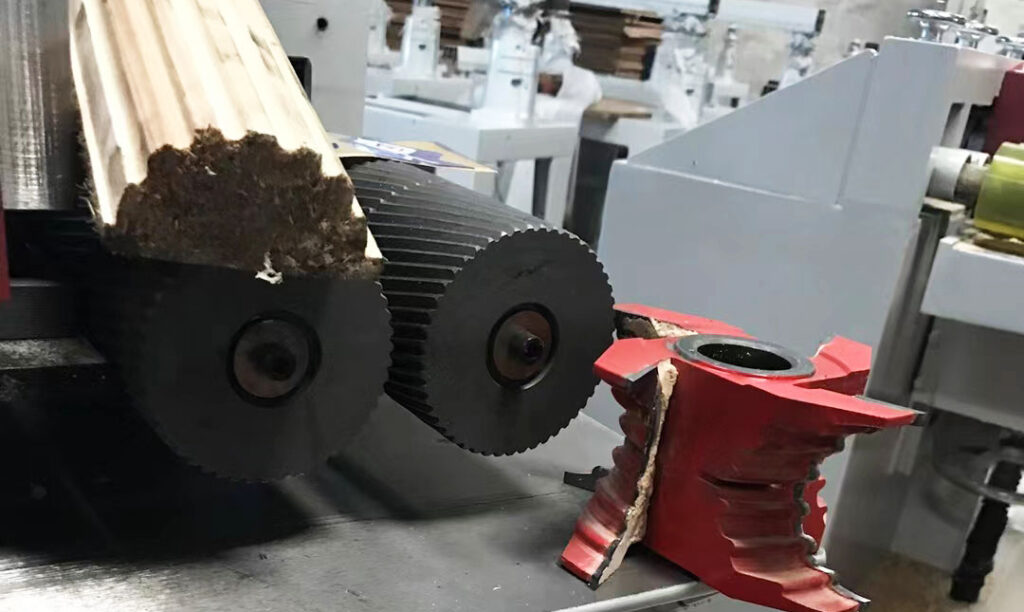
The application scenarios of wood molding machines are closely related to the intended purpose of the wood moldings. In furniture manufacturing, they are used to create moldings for wardrobe borders, decorative moldings for cabinet doors, and moldings for table and chair legs. These moldings not only conceal joints but also enhance the overall design, such as the carved moldings commonly seen in European furniture and the simple trimmings found in American furniture. In interior decoration, wood line machines create lines that can be used as wall sidings, ceiling trims, and door frame moldings, creating spatial divisions or enhancing decorative details. For example, solid wood lines, installed along the edges of living room ceilings, offer an environmentally friendly and aesthetically pleasing alternative to plaster molding. In wood carving and gift making, wood line machines can create hair-thin decorative lines, which can be used to embellish wood carvings or create edging for wooden gift boxes, enhancing the sophistication of the work.
Wood line machines offer numerous advantages. First, they offer high processing efficiency. While manually carving a complex line one meter long might take hours, wood line machines can process several meters per minute, significantly shortening production cycles and making them suitable for mass production. Second, they offer high precision and consistency. Manual processing can easily lead to inconsistent line dimensions due to uneven force or operator error. Wood line machines, through mechanical positioning and standardized tooling, ensure that cross-sectional dimensional errors within the same batch of lines are within 0.5mm. Third, it has a wide range of applications. It can process softwoods like pine and fir, as well as hardwoods like oak and walnut. It can also handle a variety of complex cross-sections, such as semicircular, trapezoidal, and wavy, meeting diverse design needs. Fourth, it reduces labor costs. Traditional manual processing requires extremely high levels of skill from artisans, while wood molding machines require only minimal training, reducing reliance on skilled labor.

In short, wood molding machines, with their efficient and precise processing capabilities, have become a core piece of equipment for wood molding production. Combining the natural beauty of wood with the precision of machinery, they provide a rich array of styling elements for the furniture and decoration industries, driving the development of refined and personalized wood products.
